Wooden wall maps come in a wide range of styles, finishes, and levels of detail. While that variety is part of the appeal, it can also make choosing the right one feel harder than it needs to be. The key is not to start with the map itself, but with the space it’s going into.
This guide walks through the main decisions step by step, focusing on how different wooden map styles actually behave on the wall. By the end, you should have a much clearer sense of which type of wooden wall map fits your room, your lighting, and your overall style.
If you’re still exploring the basics, start with our Wooden Wall Maps Explained guide for an overview of materials, sizing, and lighting options.
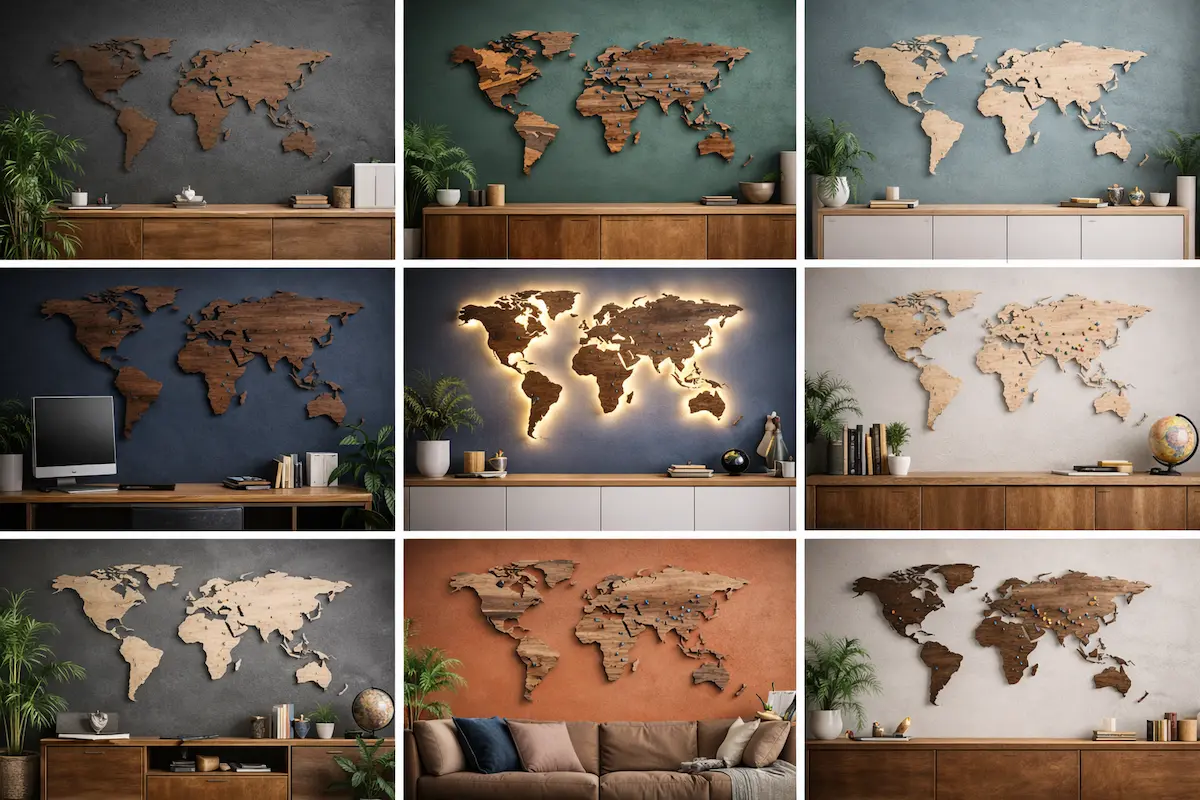
Start With the Room, Not the Map
The same wooden wall map can feel completely different depending on where it’s placed. A large living room wall, for example, can support bolder designs and deeper layering, while a hallway or home office usually benefits from something quieter and more restrained.
Distance also matters. In rooms where you view the wall from several feet away, stronger contrast and depth tend to work better. In smaller spaces, simpler designs often feel more balanced and intentional.
Flat vs 3D Wooden Maps
Flat wooden wall maps sit close to the wall and rely mainly on shape and contrast for their impact. They tend to feel subtle and tidy, which makes them a good fit for smaller rooms or walls that already have other décor elements.
3D wooden maps use layered pieces to create depth. That extra dimension adds shadows and visual weight, which helps the map stand out as a focal point. These designs usually work best on larger, more open walls where they have room to breathe.
Light Wood vs Dark Wood Finishes
Wood tone has a major influence on how a map feels in a room. Lighter woods tend to reflect more light and feel airy, which works well in modern, Scandinavian, or minimalist spaces. They also pair naturally with white or neutral walls.
Darker wood finishes create stronger contrast and a more dramatic presence. These are often a better fit for feature walls, moodier interiors, or rooms with darker furniture and flooring. The choice isn’t about better or worse, but about how much visual weight you want the map to carry.
Minimal vs Detailed Map Styles
Some wooden wall maps focus on clean outlines and simple shapes, while others include cities, borders, lakes, and geographic details. Minimal designs tend to function more like pure décor, blending into the room without demanding attention.
More detailed maps invite closer inspection. They often appeal to people who enjoy geography, travel, or marking places they’ve been. In rooms where people spend time up close, that added detail can make the map feel more engaging.
LED vs Non-LED From a Lifestyle Perspective
LED wooden wall maps introduce light as part of the design. In practice, this usually works best as soft backlighting rather than bright illumination. The effect is less about visibility and more about atmosphere.
In rooms used heavily in the evening, LED lighting can add warmth and depth when overhead lights feel too harsh. In bright, daylight-focused spaces, a non-LED map often feels calmer and more natural.
Statement Piece or Subtle Accent?
One of the most common mistakes is choosing a map without deciding how prominent it should be. Some spaces benefit from a bold statement piece that anchors the room. Others work better when the map supports the space quietly without dominating it.
As a general rule, larger maps with deeper layering and darker finishes read as statements, while smaller, flatter, and lighter designs tend to feel more like accents.
Putting It All Together
Choosing the right wooden wall map is less about trends and more about context. When you consider the room first, think about light and distance, and decide how much presence you want the map to have, the right style usually becomes obvious.
A wooden wall map should feel intentional, not forced. Taking the time to match the style and finish to your space helps ensure it feels like a natural part of the room rather than something added at the last minute.
To see how different styles work in specific spaces, visit our Wooden Wall Maps by Room guide.
If you’re narrowing things down further, our Wooden Wall Map Sizing & Placement Guide walks through measurements and spacing step by step.