Wooden wall maps don’t behave the same way in every space. The same map that looks perfect in a living room can feel oversized in a bedroom or underwhelming in a large open-plan area. That’s why choosing a wooden wall map works best when you think about the room first, not just the design.
This page brings together our room-by-room guides to help you see where wooden wall maps work best, how they’re typically sized, and what to consider before installing one in a real home.
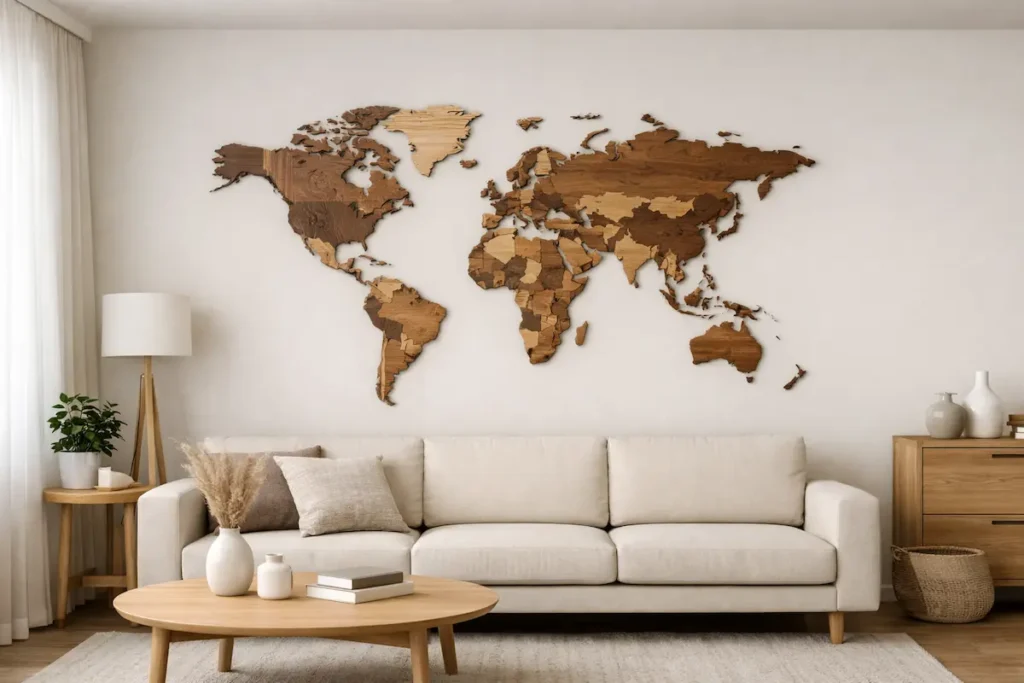
Why Room Placement Matters With Wooden Wall Maps
Unlike flat prints, wooden wall maps have depth, texture, and visual weight. That makes them more sensitive to scale, lighting, and surrounding furniture.
A good room match helps a map:
- Feel intentional rather than decorative clutter
- Sit comfortably with furniture and wall space
- Look balanced in both daylight and evening lighting
Thinking in terms of room use makes it much easier to choose the right size, finish, and style from the start.
Wooden Wall Maps for Living Rooms
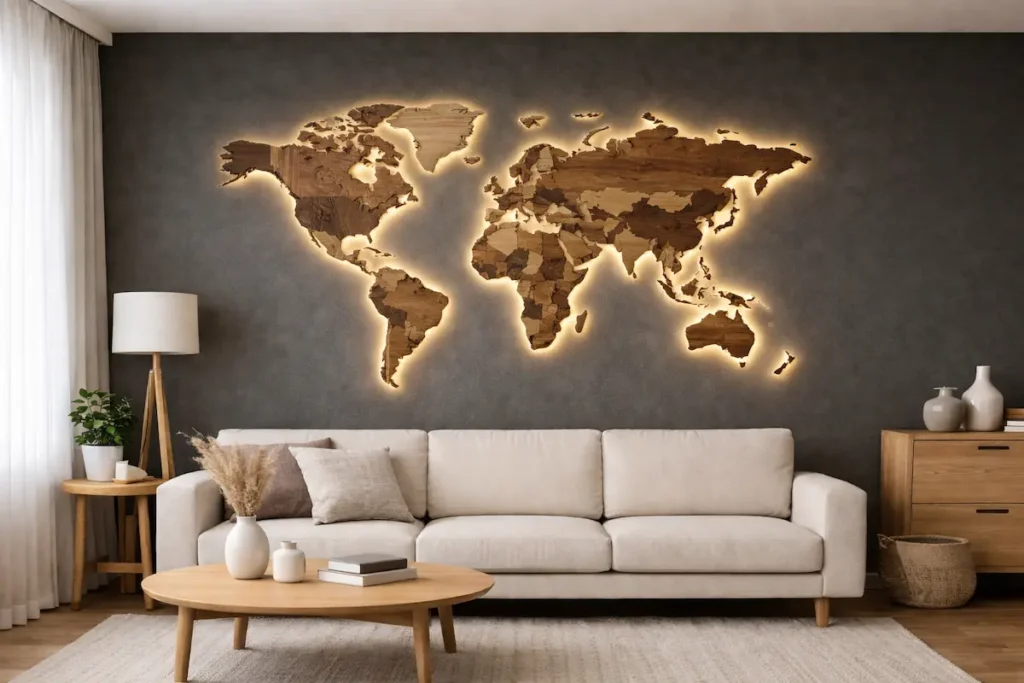
Living rooms are one of the most popular places for wooden wall maps, and for good reason. They usually offer the most wall space and benefit from statement pieces that add warmth and character.
In living rooms, wooden wall maps often work best:
- Above sofas or console tables
- On large, uninterrupted feature walls
- In open-plan spaces where scale matters
Placement, sizing, and lighting all play a bigger role here than in smaller rooms.
👉 Read the full guide:
Wooden Wall Maps for Living Rooms – How to Choose and Place Them
Wooden Wall Maps for Bedrooms
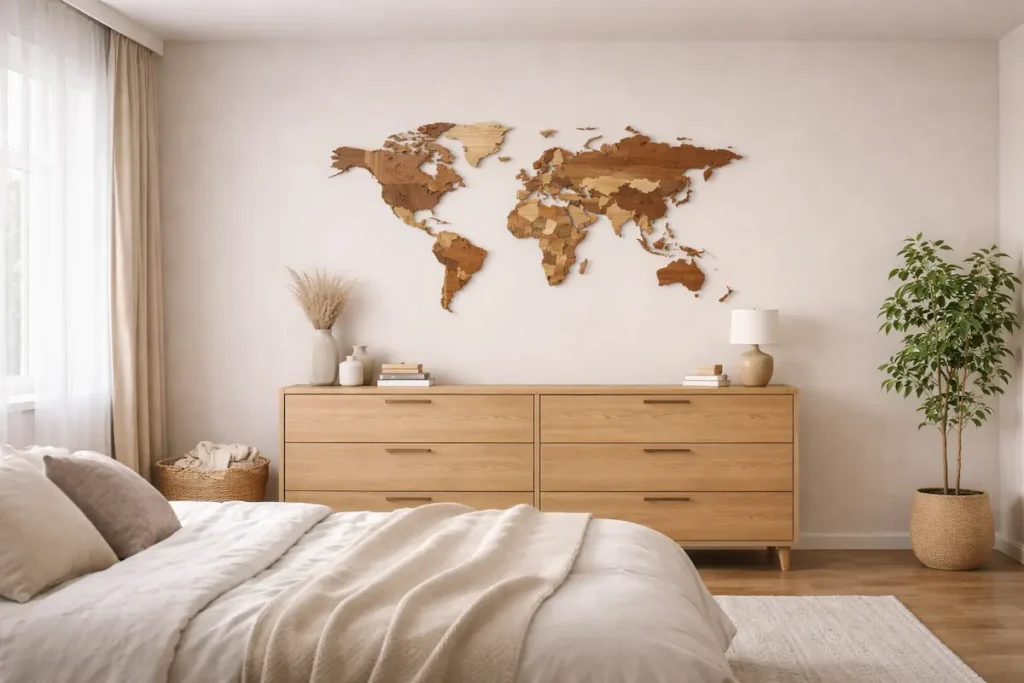
Bedrooms call for a slightly different approach. While wooden wall maps can work beautifully, they usually benefit from softer finishes and more restrained sizing.
In bedrooms, maps tend to work best:
- Above low furniture like dressers
- On accent walls rather than directly above beds
- With lighter wood tones or simpler designs
The goal is to add interest without overpowering the calm feel of the room.
(Bedroom guide coming soon)
Wooden Wall Maps for Home Offices
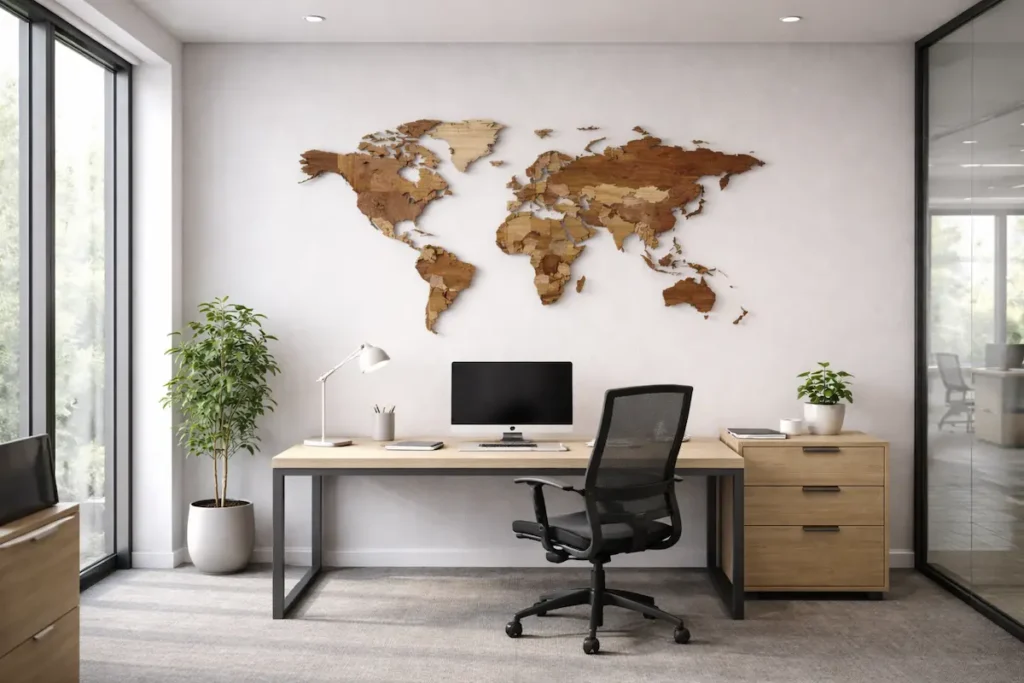
Home offices are ideal for wooden wall maps that feel personal and inspiring. This is where detail, travel markers, and educational elements often shine.
In office spaces, maps work well:
- Behind desks as a visual anchor
- On side walls where they don’t distract from screens
- In medium sizes that balance focus and presence
Office placements tend to favor clarity and meaning over dramatic scale.
(Home office guide coming soon)
Wooden Wall Maps for Hallways and Stair Walls
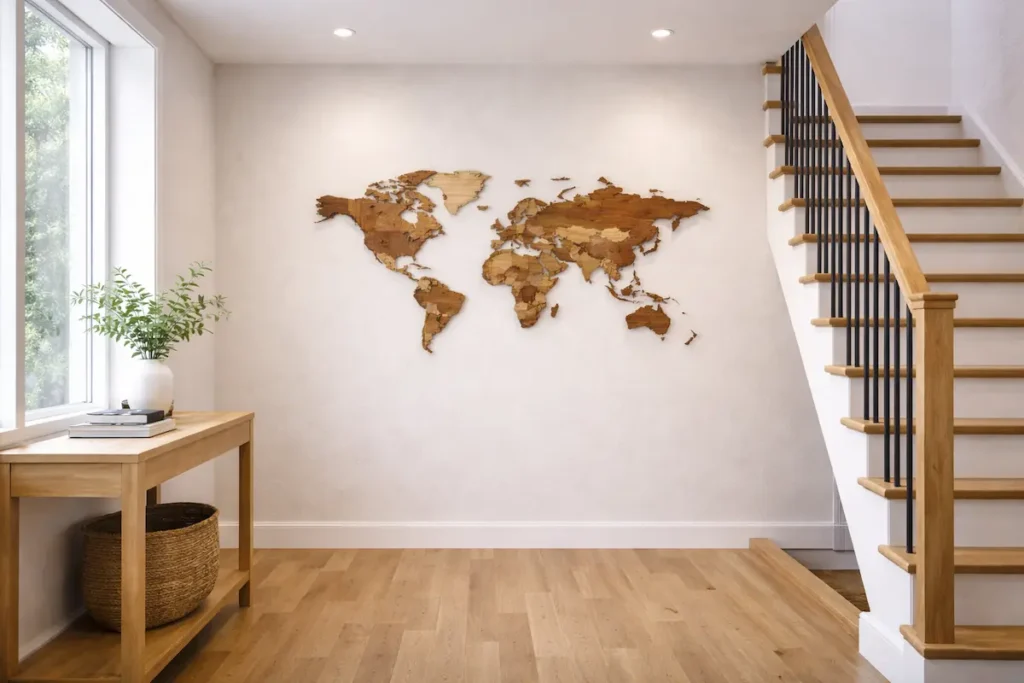
Hallways and stair walls are often overlooked, but they can be excellent spots for wooden wall maps—especially narrower or vertical designs.
These spaces work best with:
- Smaller or more compact map sizes
- Simple layouts that don’t crowd the wall
- Thoughtful placement that follows sightlines
When done well, a map in a hallway can feel like a quiet discovery rather than a centerpiece.
(Hallway and stair wall guide coming soon)
How This Page Fits With Our Other Guides
If you’re still deciding on styles, materials, or LED lighting, start with our main guide:
Wooden Wall Maps Explained
A complete overview of styles, finishes, sizing basics, and lighting options.
If you already know the room and want to focus on measurements and spacing, the Wooden Wall Map Sizing & Placement Guide walks through that step by step.
Final Thoughts
Choosing a wooden wall map becomes much easier when you think about where it will live. Each room has its own balance of space, light, and purpose, and the right map should feel like it belongs there naturally.
Use the room guides above to narrow your choices, then fine-tune size, finish, and placement to suit your space.