Choosing the right size wooden wall map is just as important as choosing the design or the wood finish. A map that’s too small can look lost on the wall, while one that’s too large can overwhelm the space and feel awkward. Getting the size right is what makes a wooden wall map look intentional instead of accidental.
The good news is you don’t need to be an interior designer to figure this out. With a few simple measurements and some practical placement tips, you can confidently choose a map that fits your wall, your furniture, and the way you actually live in the room.
This guide walks you through the process step by step. Whether you’re working with a small wall, a large feature wall, or something in between, you’ll know exactly what to look for before you buy or hang your map.
If you’re new to wooden wall maps as wall art, our Wooden Wall Maps Explained guide gives you a clear overview of styles, materials, and how these maps actually work in a room.
Before you measure, it helps to decide which room the map will go in—our Wooden Wall Maps by Room guide shows how placement changes between living rooms, bedrooms, offices, and hallways.
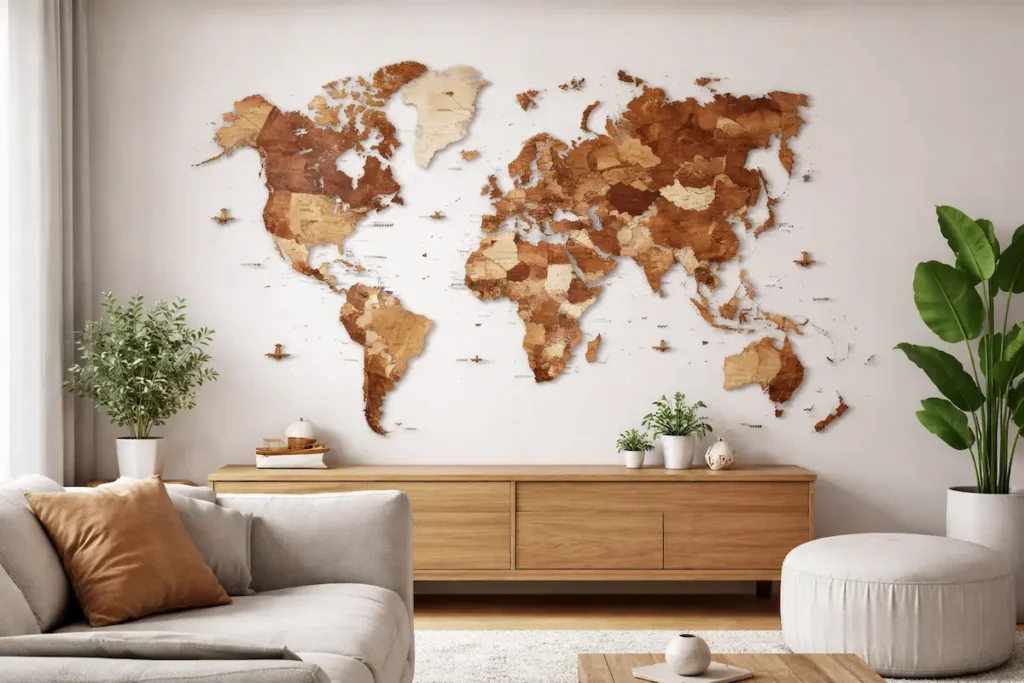
Measuring Your Wall the Right Way
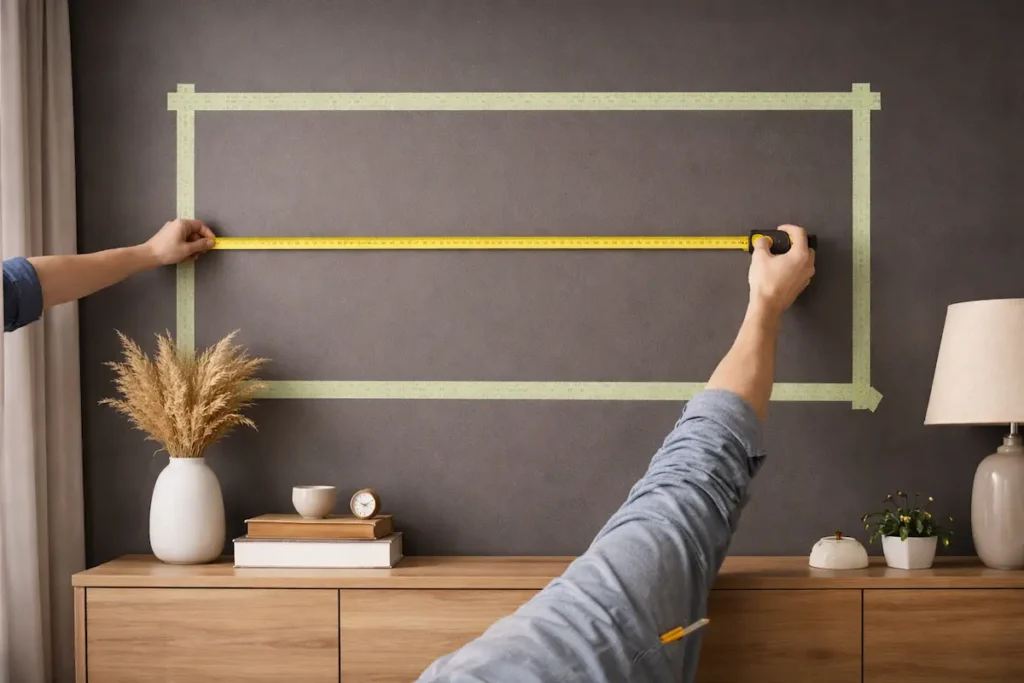
Before you look at map sizes, the first thing you need is a clear idea of how much usable wall space you actually have. This step is often skipped, and it’s where most sizing mistakes start.
Start by measuring the full width of the wall where the map will go. Then measure the height of the open space, not the total wall height. If there’s furniture below the map—such as a sofa, console table, desk, or bed—measure from the top of that furniture up to where you want the map to end.
As a general rule, leave some breathing room around the map. Aim for at least 6 to 12 inches of clear space on each side whenever possible. This spacing helps the map stand out and keeps the wall from feeling crowded.
If you’re unsure, a simple trick is to mark the outline with painter’s tape. This lets you see the size on the wall before committing and makes it much easier to judge what feels right in the room.
Recommended Wooden Wall Map Sizes
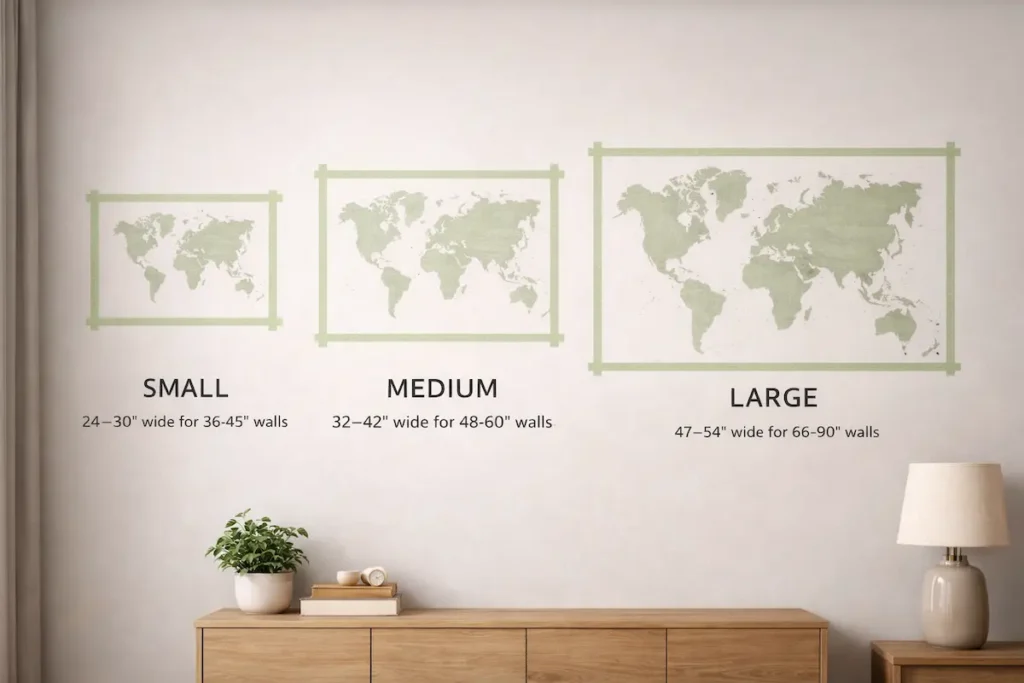
Once you know how much wall space you have, choosing the right map size becomes much easier. The goal is to match the map to the visual weight of the wall, not just make it fit. If you’re also deciding between finishes, our Walnut vs Birch Wooden Wall Maps guide can help you narrow that down.
Small Walls (Approx. 24–36 inches wide)
Smaller walls work best with compact maps that don’t overpower the space. These are ideal for hallways, home offices, narrow walls, or areas between doors and windows.
A smaller map should still have enough presence to be noticed, but it shouldn’t dominate the room. Keeping extra space around the edges helps the map feel balanced instead of cramped.
Medium Walls (Approx. 36–60 inches wide)
Medium-sized walls are the most flexible and work well with a wide range of map sizes. This is a common size range for living rooms, dining areas, and bedrooms above furniture like sofas or sideboards.
For a real-world example of how wooden wall maps are sized and placed in living rooms, see our living room wall map guide.
In these spaces, the map should feel like a focal point without filling the entire wall. Leaving visible wall space on both sides keeps the room feeling open and intentional.
Large or Feature Walls (60 inches and wider)
Large walls and feature walls can comfortably handle bigger maps. These are perfect for statement pieces where the map becomes the main visual element of the room.
On wide, open walls, larger maps feel more proportional and help prevent the wall from looking empty. This is especially effective in open-plan living areas, stair walls, or large offices.
A simple sizing tip
If you’re torn between two sizes, the larger option usually looks better—as long as you’ve left enough breathing room around it. Maps that are slightly larger tend to feel more intentional than ones that are too small for the space.
Placement Tips That Actually Work
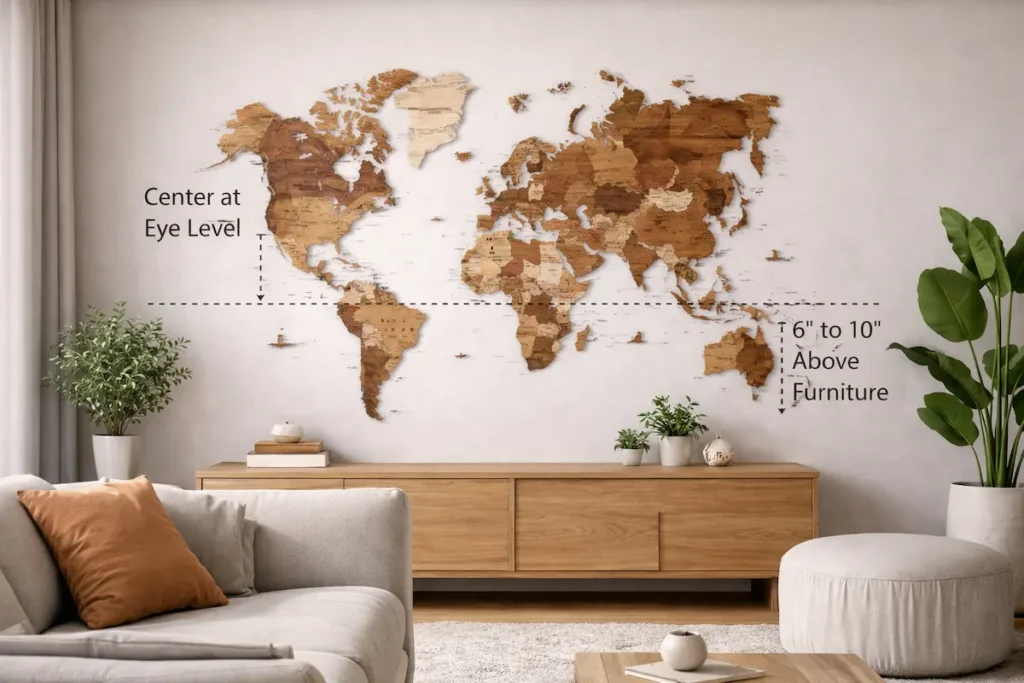
Once you’ve chosen the right size, placement is what makes the map look polished and intentional. Small adjustments here can make a big difference in how the finished result feels.
Hang the map at eye level
A good rule of thumb is to hang the center of the map at about eye level, roughly 57 to 60 inches from the floor. This keeps the map comfortable to view without feeling too high or too low.
If the map is going above furniture, adjust slightly so it doesn’t feel disconnected. The map should visually relate to what’s beneath it rather than float too far above.
Keep a clear connection to furniture
When placing a map above a sofa, console table, or bed, aim to leave 6 to 10 inches of space between the top of the furniture and the bottom of the map. This spacing keeps everything looking connected without feeling crowded.
Avoid placing the map so high that it looks separate from the rest of the room.
Center visually, not mathematically
Walls aren’t always symmetrical, and furniture isn’t always centered. Instead of measuring from the wall edges alone, center the map based on what the eye sees. This usually means centering it above furniture or within the visible wall area rather than the full wall width.
Step back and trust your eye
Before committing, take a step back and look at the map from different angles in the room. If something feels off, it probably is. Small adjustments left or right can dramatically improve how balanced the wall feels.
Common Wooden Wall Map Sizing Mistakes
Even with good intentions, a few common mistakes can make a wooden wall map feel out of place. Knowing what to avoid can save time, money, and frustration.
Choosing a map that’s too small
This is the most common issue. A map that technically fits the wall but is too small often looks lost, especially on wider walls. Small maps tend to feel like an afterthought rather than a design feature.
When in doubt, slightly larger usually looks better than too small.
Ignoring nearby furniture
Sizing a map without considering what sits below it can throw off the balance of the entire wall. A large sofa with a tiny map above it will feel mismatched, while a large map over a narrow table can feel overpowering.
Always size the map in relation to the furniture, not just the wall.
Filling the entire wall edge to edge
Leaving no space around the map makes the wall feel crowded and removes the visual impact of the piece. Wooden wall maps need breathing room to stand out and show their detail.
Visible wall space is part of the design.
Hanging the map too high
Placing the map too close to the ceiling is another common mistake. This pulls the eye upward and disconnects the map from the rest of the room.
Lowering the map just a few inches can instantly make the space feel more grounded and intentional.
Final Advice Before You Choose
Choosing the right size wooden wall map doesn’t need to be complicated. A few careful measurements, some planning around furniture, and thoughtful placement are usually all it takes to get a result that feels right.
If you’re ever unsure, remember this: a map that feels slightly larger but well-spaced almost always looks better than one that’s too small. Trust your measurements, give the map room to breathe, and don’t be afraid to step back and adjust before committing.
Related guides to help you decide
- Walnut vs Birch Wooden Wall Maps: Which Finish Fits Your Room?
Learn how different wood tones affect the look and feel of your space. - Wooden Wall Maps Collection
Explore different styles, sizes, and finishes to see what works best for your home.